
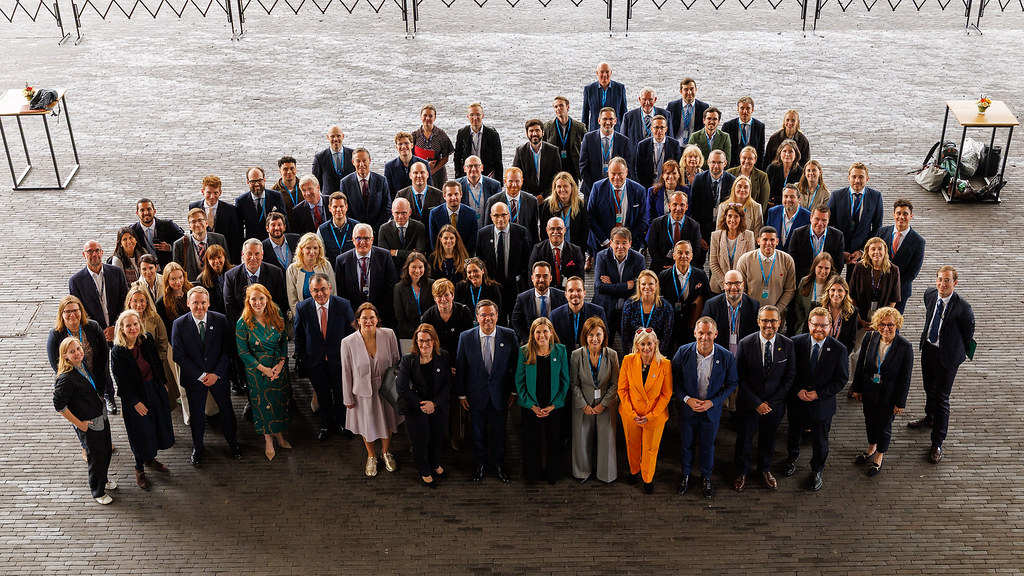
Luxembourg, June 2026 – The S9+ Coalition participated in the D9+ Ministerial Meeting hosted under the Luxembourg Presidency, bringing together ministers, government representatives, businesses and startup ecosystem leaders from across Europe’s leading digital nations.
With representatives from 10 member organisations attending, Luxembourg marked one of the coalition’s strongest and most coordinated presences at a ministerial meeting to date. Throughout the week, S9+ worked to ensure that the perspectives of startups and scaleups were part of discussions on competitiveness, digital sovereignty, innovation and Europe’s future growth agenda.
Starting at the Heart of Luxembourg's Innovation Ecosystem
The programme began at Technoport in Belval, Luxembourg’s first technology business incubator and a cornerstone of the country’s innovation ecosystem.
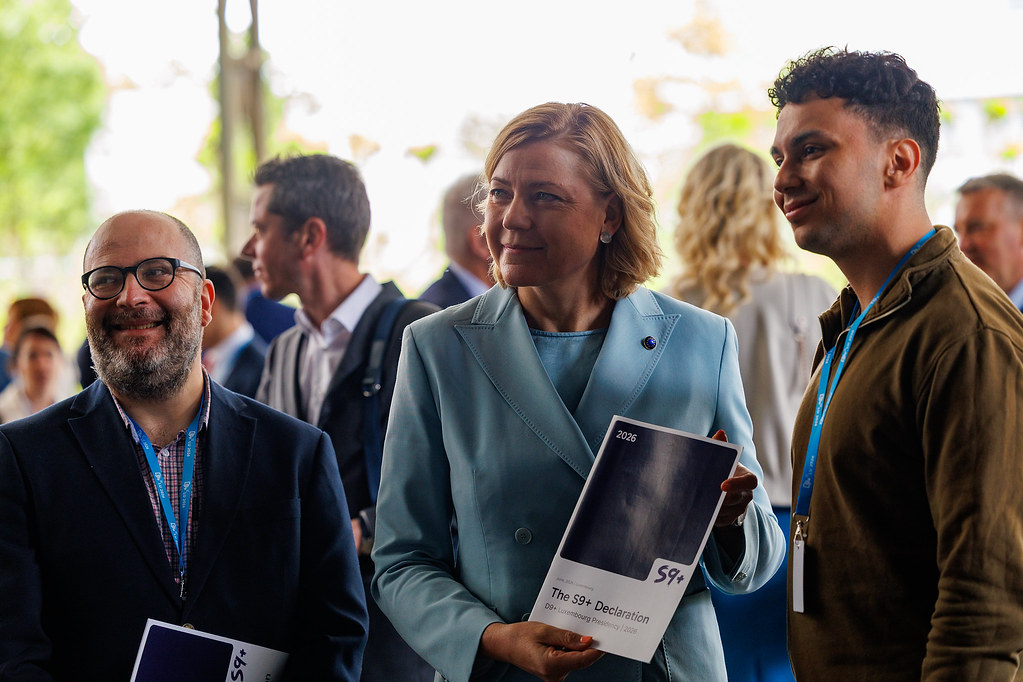
There, S9+ members met with ministers, senior government representatives and ecosystem leaders to discuss the opportunities and challenges facing Europe’s startups. During these exchanges, members handed over physical copies of the S9+ Luxembourg Declaration and shared recommendations on how Europe can become a better place to start, build and scale globally competitive companies.
Among those we met was Henna Virkkunen, Executive Vice-President of the European Commission for Tech Sovereignty, Security and Democracy, alongside ministers and senior representatives from across the D9+ countries.
Presenting the S9+ Luxembourg Declaration
A key moment of the meeting was the presentation of the S9+ Luxembourg Declaration by Genna Elvin (President of PULSE Luxembourg Startup Association and co-founder of Tadaweb) and Peter Kofler (Chairman of Danish Entrepreneurs).
The declaration argues that Europe cannot regulate its way to competitiveness and calls for a more ambitious approach to strengthening Europe’s position in an increasingly competitive global economy.
Among its key recommendations are:
- The creation of a true EU Inc. through a regulatory-based 28th regime;
- Stronger implementation of the Single Market and the Once-Only Principle;
- The elimination of national gold-plating and fragmented implementation of EU legislation;
- Consistent enforcement of existing rules before introducing new regulation;
- Greater support for Europe’s scaling ecosystem, including incubators, accelerators and innovation intermediaries.
The declaration received positive feedback throughout the event, with many participants welcoming a direct and candid startup perspective on Europe’s competitiveness challenges.
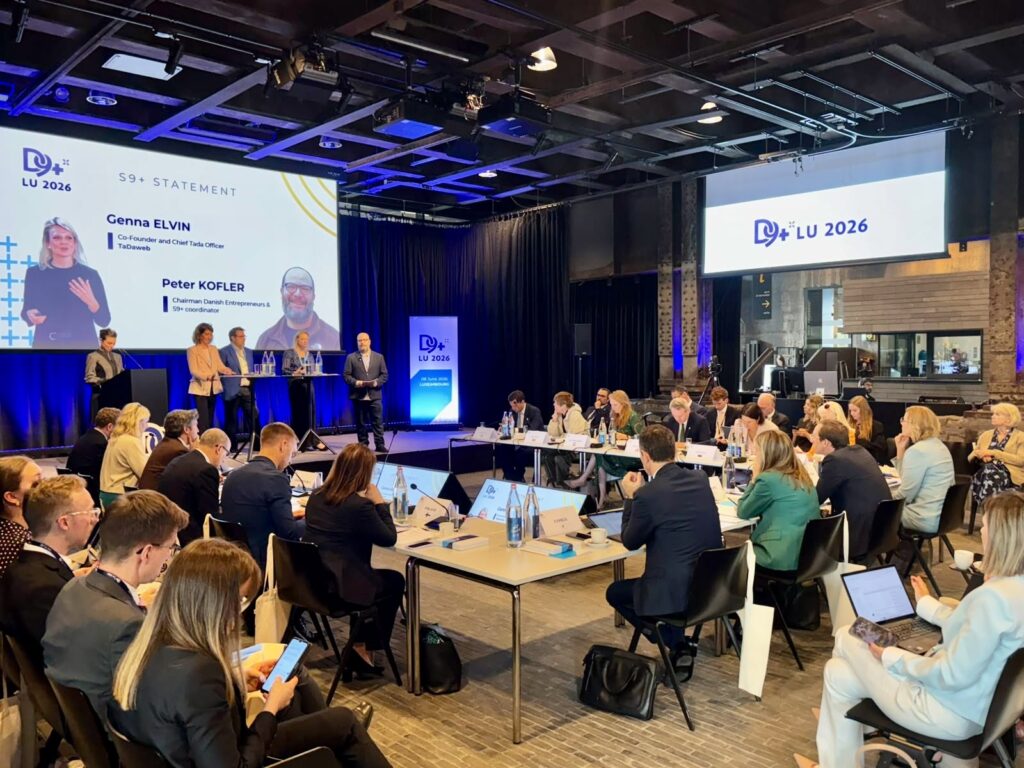
Startups at the Centre of the Competitiveness Debate
The discussions focused on several topics that are central to the startup ecosystem, including digital sovereignty, regulatory simplification, the future of Europe’s digital rulebook and the challenge of scaling innovative companies within Europe.
During the Q&A session, S9+ representatives highlighted the importance of attractive employee stock option frameworks, access to growth capital, reducing fragmentation across the Single Market and ensuring that startups remain part of policy discussions.
A recurring theme throughout the discussions was that Europe has demonstrated its ability to create innovative startups, but continues to struggle to help those companies scale globally from Europe.
Engaging Directly with Ministers and Policymakers
During the networking sessions, S9+ members met directly with ministers and senior government representatives from across Europe, presenting physical copies of the S9+ Luxembourg Declaration and discussing the reforms needed to strengthen Europe’s innovation ecosystem.
These conversations included exchanges with representatives from the European Commission and several D9+ governments, reflecting the growing recognition that startups must play a central role in shaping Europe’s future competitiveness agenda.
Looking Ahead
The D9+ Luxembourg Declaration, published following the meeting, highlights many of the same priorities raised throughout the day, including strengthening Europe’s competitiveness, reducing fragmentation, advancing digital sovereignty, supporting the scale-up of European technology companies and pursuing regulatory simplification.
For S9+, the message remains clear: startups are not merely stakeholders in Europe’s future—they are part of the strategy.
As Europe debates how to strengthen its economic resilience, technological leadership and global competitiveness, policymakers must ensure that startups and scaleups remain at the centre of the conversation.
The challenge now is turning ambition into implementation.